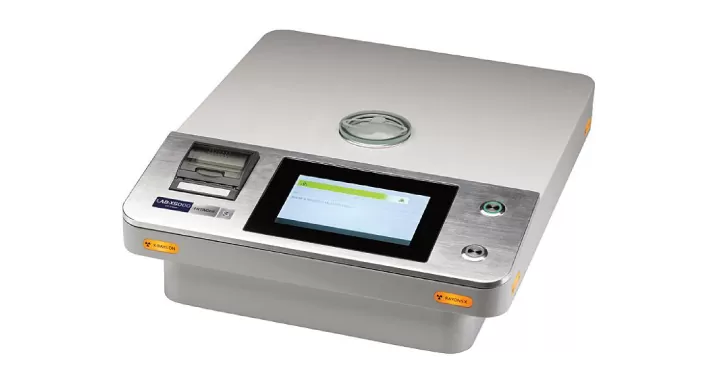



X-ray fluorescence (XRF) is the most versatile analytical method. It allows direct analysis of samples in various physical states: solids (metals and non-metals), powders and liquids (in inorganic and organic matrices). XRF has the widest dynamic range, from ppm to 100 per cent, and allows up to 80 elements to be analysed simultaneously with a concentration difference of five orders of magnitude; for example, 10 ppm of iron in sand in the presence of 99 per cent SiO₂. It can be used both in the laboratory and in the field, with minimal or no sample preparation at all. Furthermore, the method is non-destructive, which is important for the analysis of finished products, archaeological finds and works of art.
X-ray fluorescence (XRF)